

To get your business recommended by ChatGPT, make the brand easy to find, understand and verify. Allow OAI-SearchBot, publish clear evidence-led content, keep your business facts consistent, earn independent mentions and reviews, and measure recommendation frequency across a fixed set of prompts. No person or agency can guarantee the outcome.
People call it “ranking on ChatGPT”. That is convenient shorthand, but it is not what happens. Google gives you an ordered results page. ChatGPT builds an answer for one user, in one conversation, at one moment, and change the wording, location or context and the businesses it names may change too.
There is no fixed number-one position to win. There is still a valuable outcome: becoming one of the businesses ChatGPT can find, trust and confidently put on a buyer’s shortlist.
Demand for this is moving fast. DataForSEO estimated 693 UK AI searches for chatgpt seo in June 2026, against 36 in July 2025, roughly nineteen times the demand in eleven months. The opportunity is real. So is the hype. This guide separates the two.
What does “ranking on ChatGPT” actually mean?
Ranking on ChatGPT is better measured as a visibility ladder than a search position:
| Level | What it means | Example |
|---|---|---|
| Discoverable | ChatGPT can retrieve a page or business record | Your service page can appear in the source set |
| Cited | ChatGPT uses your page to support a claim | Your research is linked beneath an answer |
| Mentioned | ChatGPT names your brand | Your company appears as a relevant provider |
| Recommended | ChatGPT puts your business on the shortlist | Your company is suggested for the user’s specific need |
A citation is not automatically a recommendation. Your article could be used as a source while a competitor gets the sale.
The reverse can happen too. ChatGPT may recommend a well-known brand without linking to that brand’s website in the answer.
For a business, the useful scoreboard is therefore not “What position are we?” It is:
- How often are we mentioned across relevant prompts?
- How often are we recommended?
- Is the description accurate?
- Which sources support the answer?
- Which competitors appear more consistently?
What “position 5” is now worth: our own numbers
We can show why rank is the wrong scoreboard, because it is already happening on our own brand.
The Investors Centre is the UK finance site our team built and still runs. Pulling its Search Console data for the 90 days to 31 July 2026 gives results that would look like a win on any rank-tracking dashboard, and like nothing at all in the bank:
| Page | Average position | Impressions | Clicks |
|---|---|---|---|
| Millionaires guide, quick-answer section | 5.6 | 34,537 | 3 |
| Millionaires guide, UK-numbers section | 5.6 | 33,701 | 0 |
| eToro vs Coinbase review | 3.3 | 18,505 | 15 |
Two of those are not the page ranking. They are a section of the page ranking: Google indexed the jump link to a single heading and served that fragment. It appeared 34,537 times in three months and produced three clicks.
That is the same behaviour that makes ChatGPT rankings meaningless. The engine took the passage that answered the question and left the visit behind. Position was excellent. Traffic was a rounding error.
If your reporting stops at position, this is invisible. It is also why the measurement model later in this guide counts mentions and recommendations rather than ranks.
How does ChatGPT find businesses to recommend?
ChatGPT can answer with information it already has, search the web, or combine the two. The part a business can influence most directly is live search and retrieval.
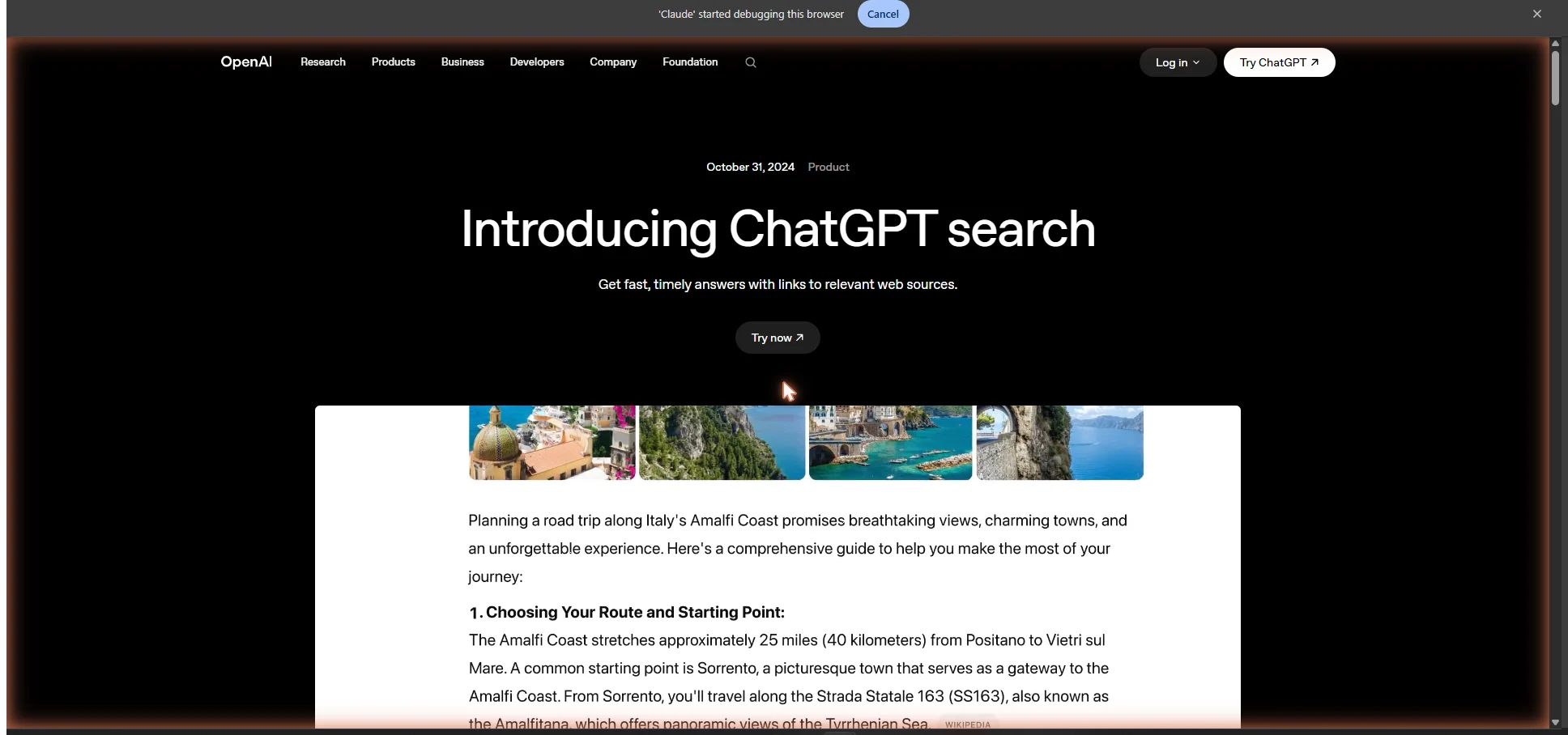
OpenAI says ChatGPT automatically searches when a question could benefit from web information. It may rewrite the prompt into several targeted searches and use external providers, currently naming Bing and Shopify among them, alongside content supplied directly by partners.
Three things follow. ChatGPT is not simply reading the Google top ten. OpenAI publishes no checklist of “ranking factors” that guarantees inclusion. And the sources used can change with the query. The practical goal is to give ChatGPT a strong body of current, consistent evidence from your site and the wider web.
The crawler detail most ChatGPT SEO guides get wrong
If you want pages to appear in ChatGPT Search, the relevant OpenAI crawler is OAI-SearchBot.
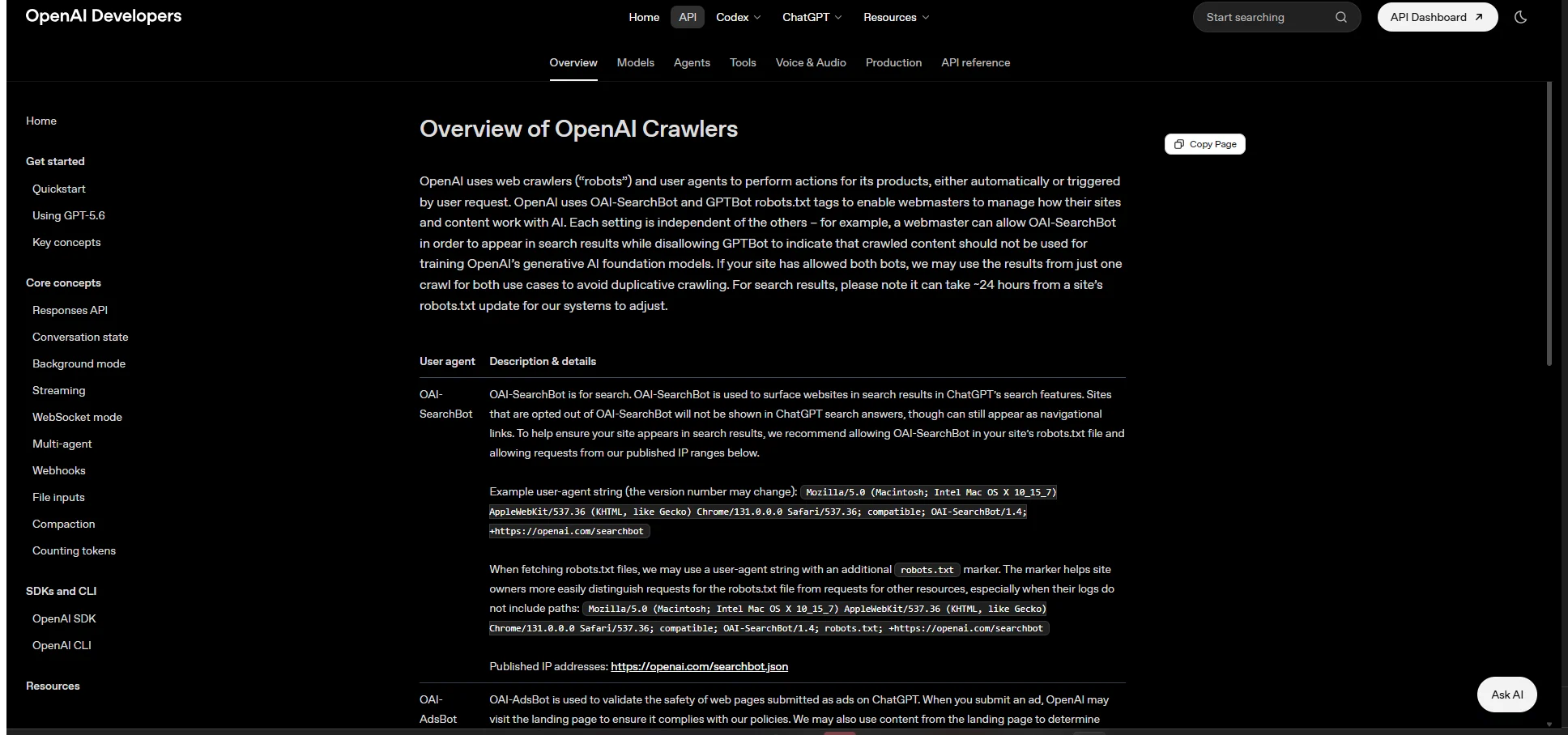
OAI-SearchBot, the crawler behind ChatGPT Search.GPTBot has a different purpose. It controls whether content crawled by OpenAI may be used to improve future foundation models. OpenAI’s crawler documentation explicitly says the two controls are independent.
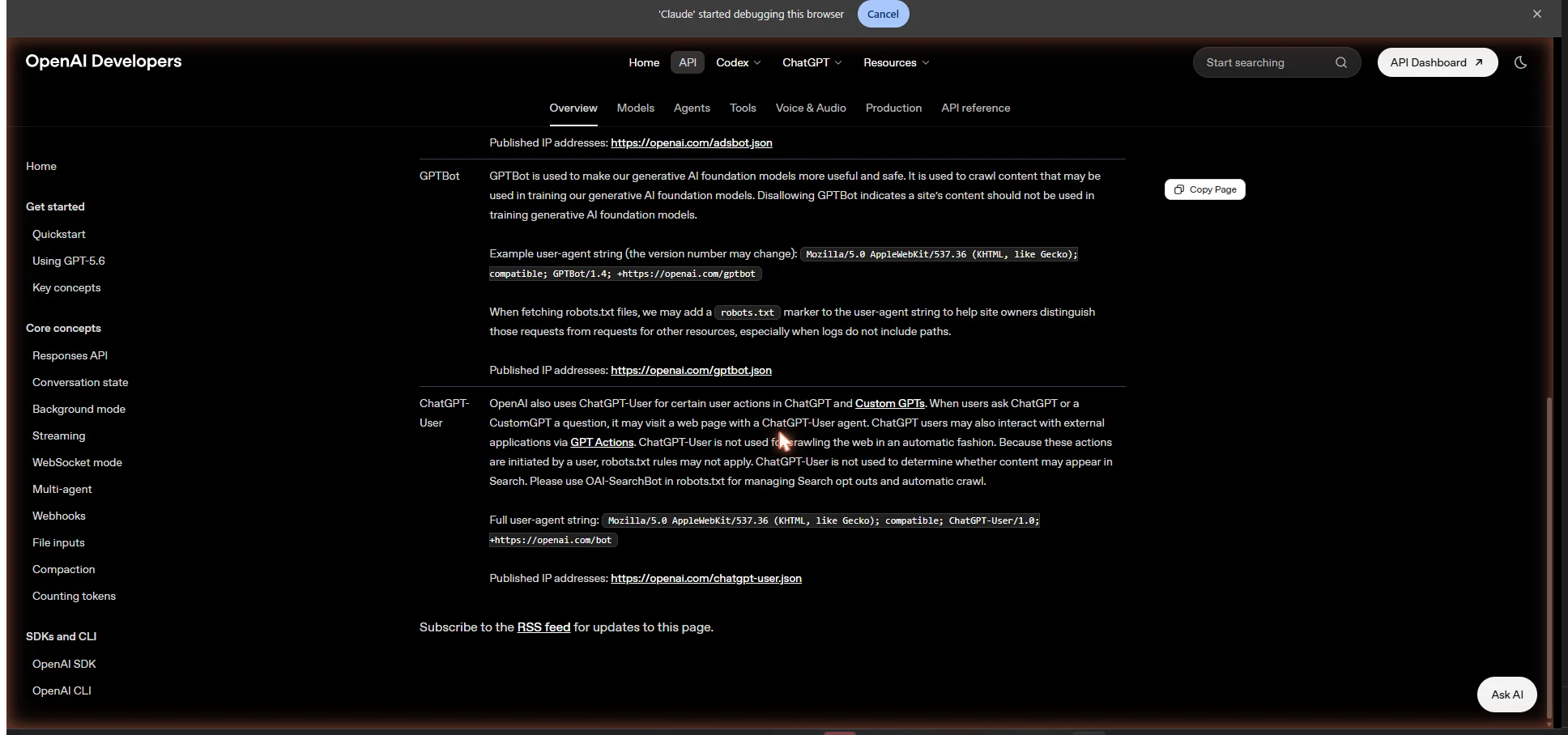
GPTBot governs potential training use, and is controlled separately from search visibility.You can therefore allow search visibility while opting out of potential training use:
User-agent: OAI-SearchBot
Allow: /

User-agent: GPTBot
Disallow: /
This is a business decision, not a universal recommendation. The important point is to make it deliberately. Blocking GPTBot does not opt you out of ChatGPT Search; blocking OAI-SearchBot does.
Publishers are already making that distinction explicitly. Reuters, for example, blocks GPTBot while allowing OAI-SearchBot, keeping its journalism out of model training while staying eligible to appear in ChatGPT Search.
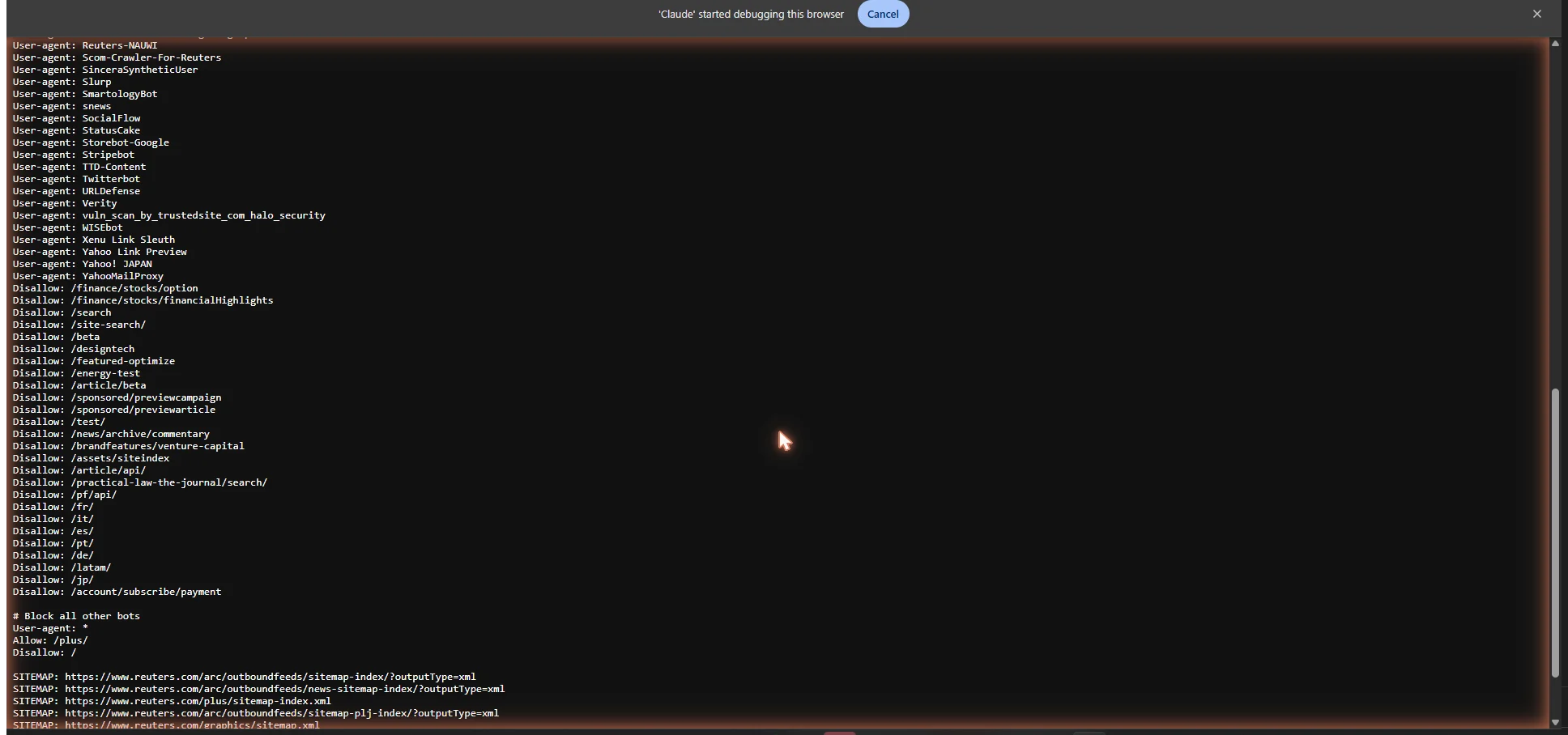
GPTBot in its robots.txt, opting out of training use.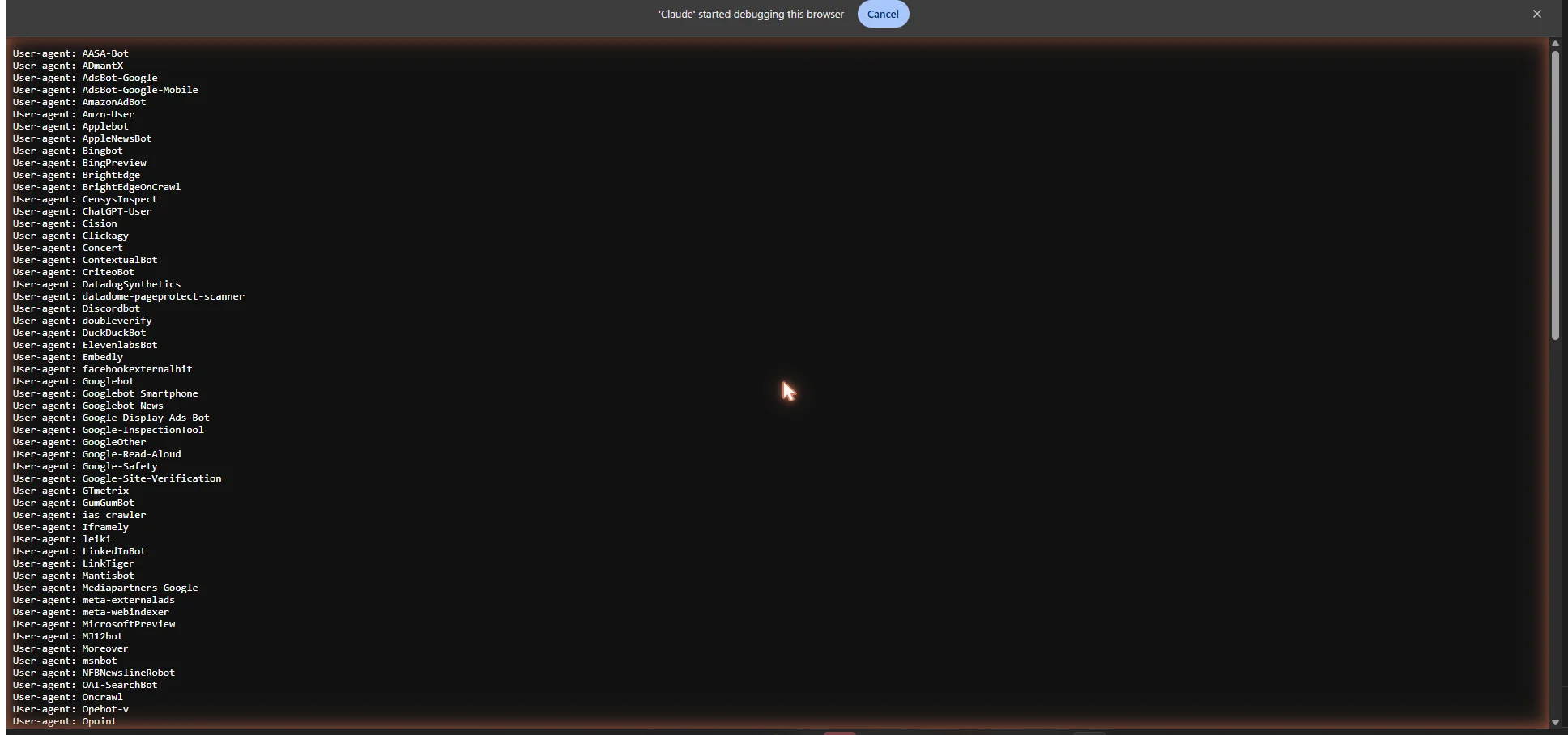
OAI-SearchBot, so Reuters remains eligible for ChatGPT Search.How to get your business recommended by ChatGPT
There is no switch that forces a recommendation. There is a repeatable process for improving the odds.
1. Start with the prompts your buyers actually use
Do not begin with a vague target such as “rank on ChatGPT”. Begin with the decisions your customers ask ChatGPT to help them make. Build a list of 15 to 30 prompts across four groups:
- Category: “Who are the best independent mortgage brokers in the UK?”
- Use case: “Which SEO agency is best for an FCA-regulated business?”
- Comparison: “What are the best alternatives to [competitor]?”
- Trust: “Is [your brand] reputable?”
Run each several ways. A local recommendation changes with the city; a “best” answer changes when price, company size or sector is added. Save the exact prompt, date, model, whether search was used, the businesses named and the sources cited. That is your baseline.
2. Make your site retrievable
ChatGPT cannot use a page it cannot reach. Before commissioning more content, confirm that OAI-SearchBot is allowed in robots.txt, that important pages return a successful status without noindex, that canonical pages sit in a clean XML sitemap, and that your business details, services and proof are publicly reachable.
Then check the one that catches most sites: essential information must be in server-rendered HTML. If your pricing, features or comparison tables only appear after JavaScript runs, there is a good chance the crawler never sees them, which we covered in why your pricing page might not exist to AI.
OpenAI notes it can take about 24 hours to adjust after a robots.txt change. Discovery is only the first gate; allowing a crawler does not guarantee a page gets selected.
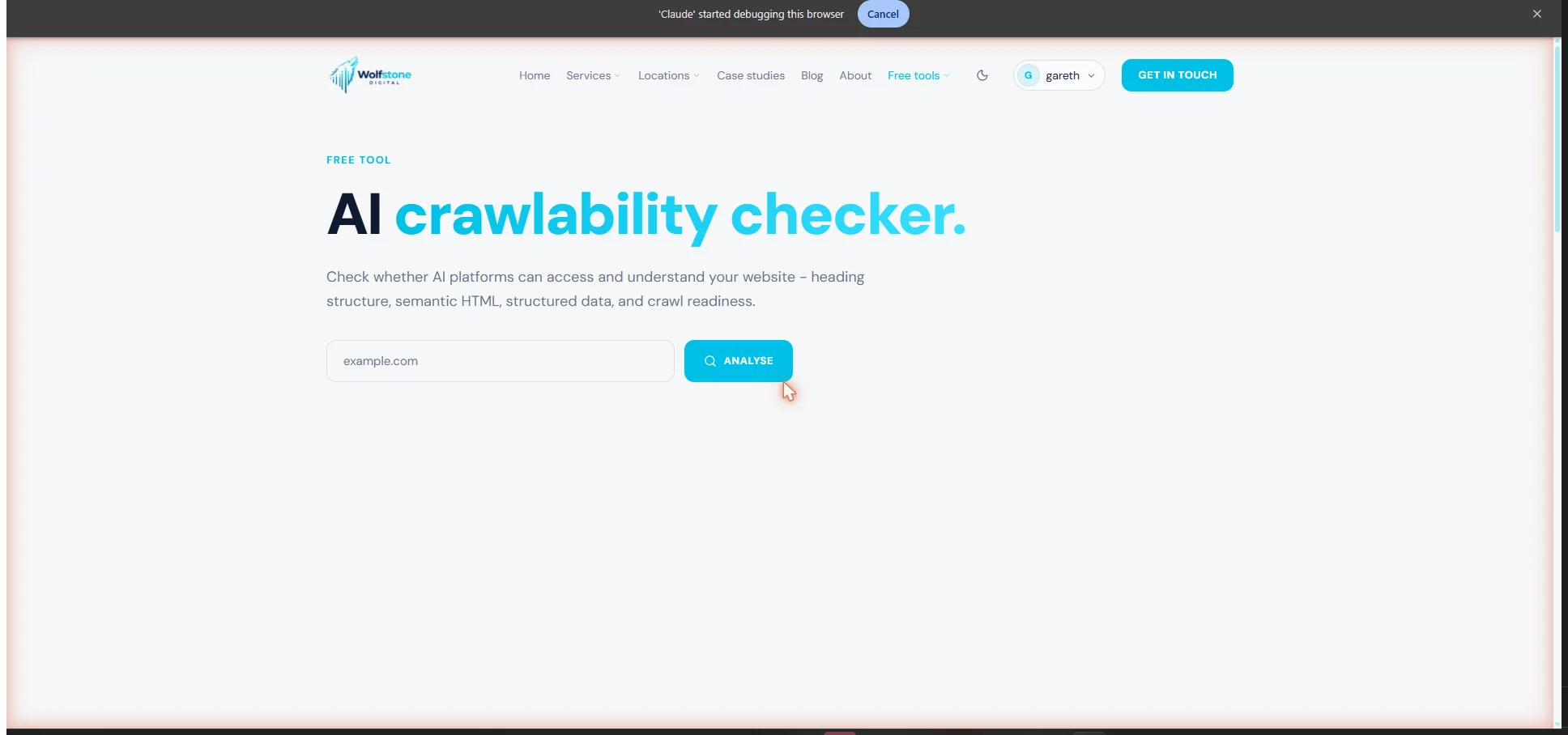
Wolfstone’s free AI Crawlability Checker gives you a quick view of what AI crawlers can access.
3. Make the business unambiguous
ChatGPT needs to understand what your company is, where it operates, who it serves and why it is qualified.
Use one clear description of the business, and keep the trading name, address, phone number, service categories and coverage areas identical everywhere they appear: homepage, About page, service pages, contact and location pages, directory and review profiles, social profiles, trade-association listings and press biographies. Contradictions between those sources are the cheapest problem on this list to fix and one of the most common.
Structured data helps search systems interpret those details. Use Organization, LocalBusiness, Product, Service, Article or Person markup where it accurately reflects visible content. Treat schema as a label, not a ranking button: it clarifies an entity, and there is no official evidence that adding it alone makes ChatGPT recommend a business.
4. Publish the evidence a recommendation needs
A recommendation is a judgement. Give the system enough evidence to make it.
Weak service copy says:
We are a leading, results-driven agency delivering innovative solutions.
Strong service copy says:
Wolfstone is a UK AI-search and SEO consultancy for regulated and high-stakes markets. Its team built and operates an international finance brand that has earned more than 1,600 citations across major AI platforms.
The second version identifies the entity, market, audience and proof. Its claims can be checked.
Build pages that answer the questions behind a buying decision: who the service is for, what it solves, what is included, what it costs or what drives the price, which sectors and locations are covered, which credentials and permissions matter, what results you have achieved, and when you are not the right choice. That last one earns more trust than any of the others.
Comparison tables, detailed case studies, transparent pricing and specific FAQs are easier for people to assess and easier for retrieval systems to quote. If you want a worked example of transparent pricing, ours is on the page about how much SEO costs in the UK.
5. Make every important claim citable
Clear writing helps. Evidence makes it trustworthy.
The KDD 2024 paper that introduced generative engine optimisation found that targeted content changes could improve visibility in generative-engine responses by up to 40%, although results varied by subject and method.
Use that principle without turning the page into chopped-up “AI bait”. Answer each section’s question in its first sentence. Keep one idea per paragraph. Attribute every statistic to its original source, date the claims that go stale, separate observed results from opinion, and add a table when comparison is the reader’s actual task.
Write for the buyer first. Google’s people-first content guidance asks whether content contains original information, demonstrates first-hand expertise, provides clear sourcing and gives readers enough to achieve their goal. Those are sensible trust tests for this article too.
6. Show genuine E-E-A-T
E-E-A-T stands for experience, expertise, authoritativeness and trustworthiness. Google is clear that it is not one standalone ranking factor; it is a framework for assessing whether content deserves trust.
In practice that means a named author with a real profile, a reviewer where specialist checking is warranted, first-hand tests with the prompts and dates disclosed, screenshots or exports behind material claims, case studies with permission and measurable outcomes, links to primary sources, and honest limitations.
Trust is damaged by fake precision. If a study is correlational, say so. If a platform has not confirmed a ranking factor, do not present it as one. If a result came from one prompt on one day, do not call it a universal rule.
Wolfstone has a legitimate experience signal to use here: the team has documented how it built a finance brand that earned more than 1,600 AI citations. Link to the methodology, and do not repeat the number without context.
7. Earn corroboration away from your own website
Your website explains your claims. Independent sources help verify them.
Prioritise the sources buyers in your market already trust: detailed customer reviews, relevant trade directories, professional bodies and registers, editorial press coverage, industry podcasts, expert contributions to reputable publications, and genuine community discussion.
The goal is not to spray the brand name across the internet. It is to build consistent, relevant evidence in places that deserve to be trusted, which is the job digital PR does properly and link schemes do not. Buying fake reviews, manufacturing Reddit threads or paying to be called “best” in a list with no methodology may create mentions, but they weaken the exact trust a recommendation depends on.
8. Match the proof to the type of business
Different recommendations need different evidence.
| Business type | Evidence ChatGPT may need to verify | Pages and profiles to strengthen |
|---|---|---|
| Local service business | Location, service area, opening hours, reviews, availability, licences | Location pages, contact page, Bing Places, Google Business Profile, relevant local directories |
| Professional or regulated service | Named experts, credentials, permissions, process, case studies, limitations | Author profiles, team pages, regulator or professional-body listings, detailed service pages |
| SaaS | Use cases, pricing, integrations, security, customer fit, independent reviews | Public pricing, documentation, integration pages, security page, G2 and Capterra profiles |
| Ecommerce | Product specifications, price, stock, delivery, returns, reviews | Product pages, merchant feeds, Product and Offer markup, review platforms |
| B2B consultancy | Sector expertise, named outcomes, method, commercial fit | Case studies, research, comparison pages, trade-press coverage |
Do not copy the same GEO checklist into every sector. A solicitor, hotel and software platform do not earn trust in the same way.
9. Measure recommendation frequency, not a fictional rank
One ChatGPT answer is not a benchmark. Create a monthly tracking sheet with:
| Field | What to record |
|---|---|
| Prompt | Exact wording used |
| Context | Location, use case, budget or company type |
| Date and model | When and where the test ran |
| Search used? | Yes or no |
| Brand mentioned? | Yes or no |
| Brand recommended? | Yes or no |
| Citation present? | URL and source type |
| Accuracy | Correct, partly correct or incorrect |
| Sentiment | Positive, neutral or negative |
| Competitors | Which alternatives appeared |
Track the share of prompts where the brand is mentioned and recommended, plus the accuracy of its description and the sources that keep influencing answers. Repeat the tests, because outputs vary: moving from 2 recommendations in 30 prompts to 9 in 30 tells you far more than claiming you went from “position six” to “position two”. You can establish a quick baseline with the free AI Visibility Checker.
A practical 90-day ChatGPT visibility plan
| Window | Focus | The work |
|---|---|---|
| Days 1 to 30 | Become findable and measurable | Define 15 to 30 commercial and trust prompts and record who currently wins them. Audit OAI-SearchBot, indexability, sitemaps and rendered HTML. Fix inconsistent business details. Add named authors, dates and source links to priority pages. |
| Days 31 to 60 | Publish the missing proof | Strengthen two high-intent service or use-case pages. Publish one case study with an explicit method and outcome. Answer the real pre-sale questions. Make pricing, or the factors driving it, understandable. |
| Days 61 to 90 | Earn independent corroboration | Ask eligible customers for honest reviews. Complete directory and register profiles. Pitch original data or expert commentary to sector press. Re-run the prompt set and compare mention, recommendation and accuracy rates. |
This is not a guaranteed 90-day route to a recommendation. It is enough time to repair the foundations, publish better evidence and establish whether visibility is moving.
If you would rather not run that ninety days yourself, we will run it and put the outcome in writing.
What does not make a business rank on ChatGPT?
| Tactic | Why it does not work |
|---|---|
Allowing GPTBot and hoping | That governs training, not search. OAI-SearchBot is the control for ChatGPT Search. |
Adding an llms.txt file | Possibly useful as an experimental directory. OpenAI does not list it as a requirement, and it is not a shortcut. |
| Publishing hundreds of AI-written articles | Scale without evidence creates more pages, not more trust, and makes you harder to tell apart from everyone else. |
| Stuffing “best” and “ChatGPT” into copy | Repetition does not prove quality. Use the buyer’s words, then support them with evidence. |
| Ranking yourself first in your own “best” list | Weak recommendation evidence, and it costs credibility. If you publish comparisons, disclose the method and the conflict. |
| Paying for a guaranteed position | Nobody controls OpenAI’s retrieval, providers, model behaviour or the user’s context. A guarantee is a sales claim. |
Can you guarantee that ChatGPT will recommend your business?
No. You can improve the probability by becoming easier to retrieve, clearer to understand and better corroborated. You cannot force a particular answer. That is less exciting than a “ChatGPT ranking hack”, and it is the reason the approach is defensible.
Build a business that deserves to be recommended, publish the proof, make it accessible, earn independent confirmation, then measure whether the recommendations follow.
The fastest first step is a baseline. Use the free AI Visibility Checker to see whether the major platforms mention, cite or recommend you, then the AI Crawlability Checker to find technical blockers. If the brand is absent you will know whether to start with crawlability, content or authority. If you would rather someone else ran the programme, that is what our AI search visibility service does.
Frequently asked questions
Does ChatGPT use Google or Bing? OpenAI says ChatGPT Search uses external search providers and directly supplied partner content. Its current help documentation names Bing and Shopify among those providers. It does not say every query uses one search engine exclusively, so claims that ChatGPT simply “reads Google” or always mirrors Bing are too broad.
Does schema markup help a business get recommended by ChatGPT? Schema can make business details easier for search systems to interpret, but it is not a guaranteed ChatGPT ranking factor. Use accurate structured data to describe visible content. Do not add unsupported ratings, reviews or claims.
How long does it take to rank on ChatGPT? There is no standard timeframe. A crawl-rule change can be processed quickly, while earning authoritative coverage, reviews and consistent recommendation visibility can take months. Measure changes across a repeated prompt set instead of promising a date.
Can a local business get recommended by ChatGPT? Yes, particularly when the prompt contains a clear location and need. Keep the business name, category, address, service area, hours and reviews accurate across the website and major map, directory and booking profiles.
Is ChatGPT SEO the same as GEO? ChatGPT SEO is the platform-specific part of a wider discipline called generative engine optimisation, or GEO. The foundations overlap with SEO. The extra work is measuring mentions and recommendations inside generated answers.
Does being cited by ChatGPT actually send traffic? Often far less than the citation suggests, which is why we measure recommendations rather than referrals alone. Our own finance brand has pages sitting at position 5.6 in Google with tens of thousands of impressions and almost no clicks, because the answer was extracted and the visit never happened. Assume an AI citation buys influence over the shortlist, not a session in your analytics.
Data note: the AI-search volumes for chatgpt seo come from Wolfstone Digital’s Keyword and Content Strategy, compiled 2 July 2026 using the DataForSEO AI Optimization API (United Kingdom, English). AI-search volumes are provider estimates and should be treated directionally rather than as exact prompt counts.