
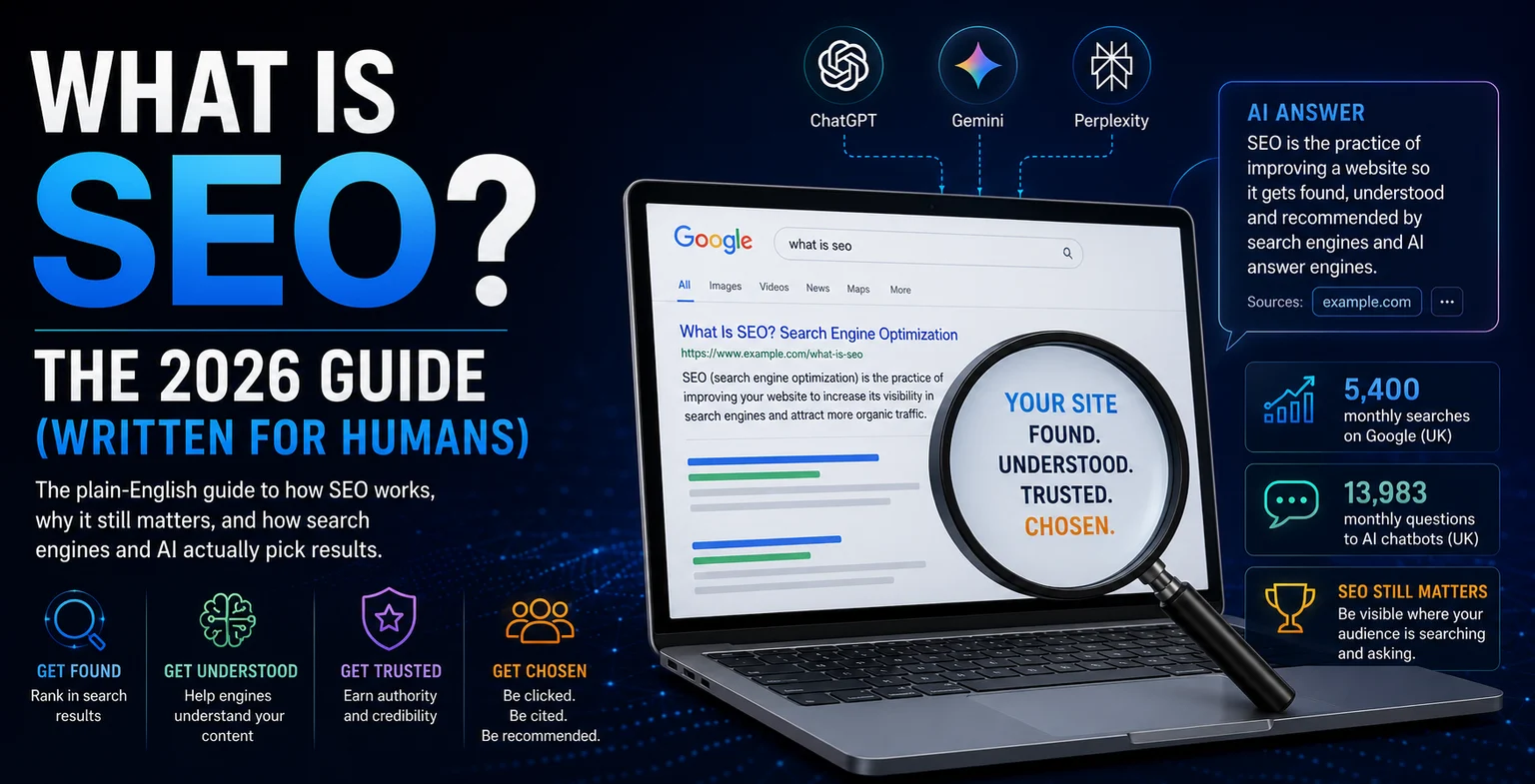
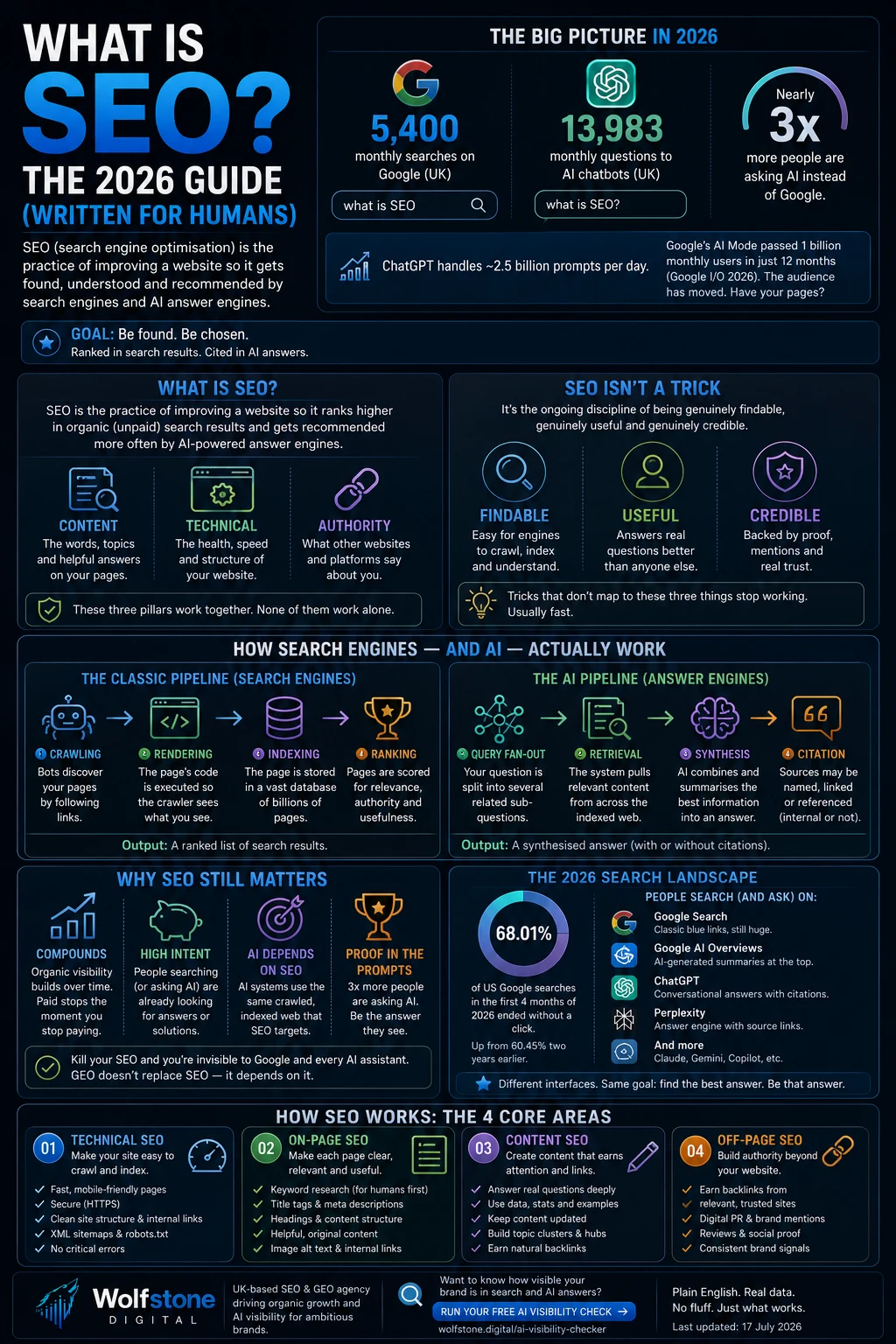
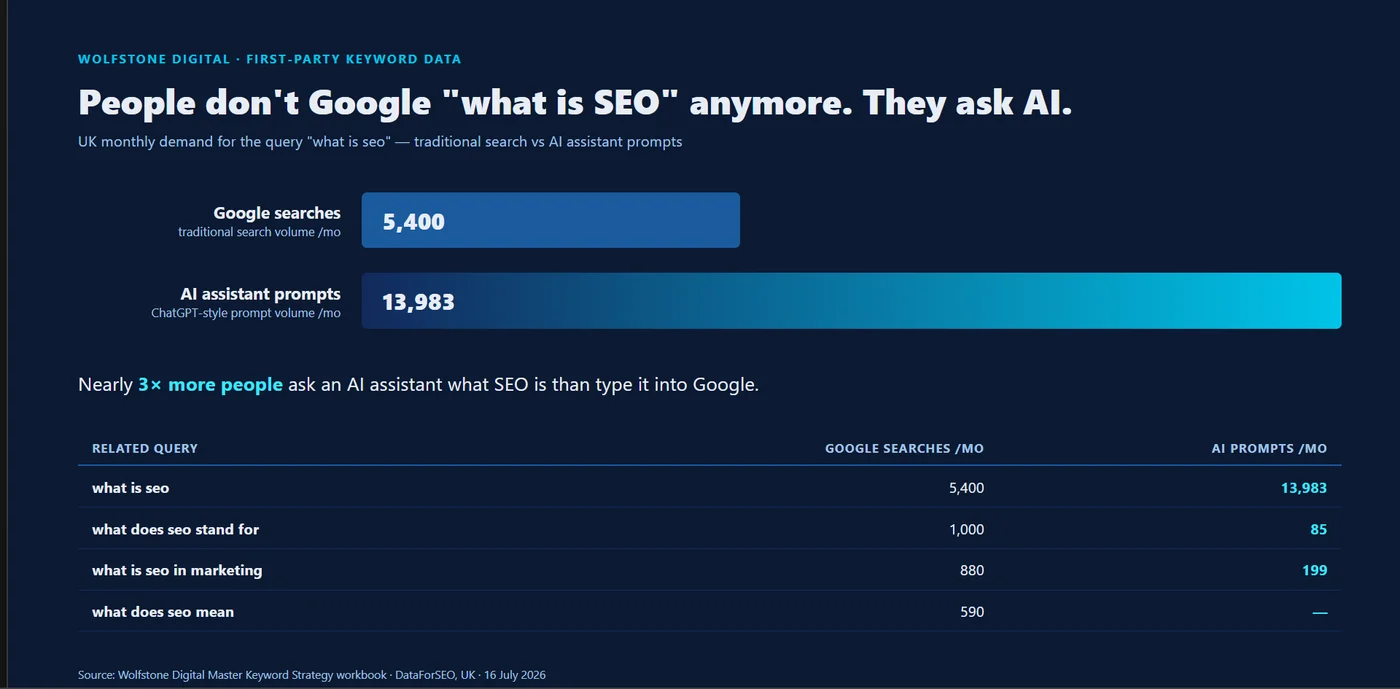
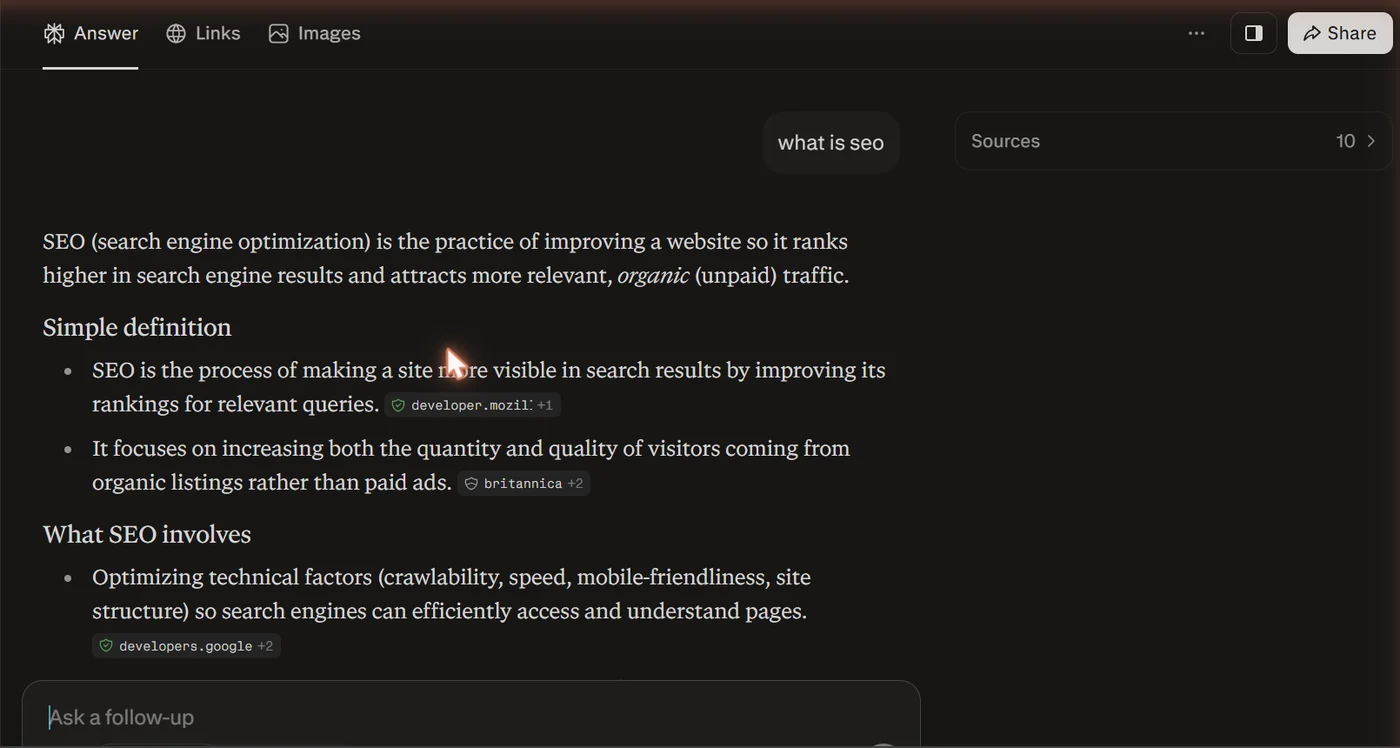
SEO - search engine optimisation - is the practice of shaping a website so it gets found, understood, and recommended by the systems people use to search: Google, Bing, and increasingly ChatGPT and Google’s AI Overviews. Here’s the number that should worry anyone still treating SEO as optional: people type “what is SEO” into Google roughly 5,400 times a month in the UK - and ask an AI chatbot the same question an estimated 13,983 times a month. Nearly three times as many people are asking AI instead of Google. This guide explains what SEO actually is, how it really works in 2026, and - honestly - whether it’s still worth doing.
What is SEO?
SEO is the practice of improving a website so it ranks higher in organic (unpaid) search results and gets recommended more often by AI-powered answer engines. It covers the words on your page, the technical health of your site, and what other websites and platforms say about you - none of which work in isolation.
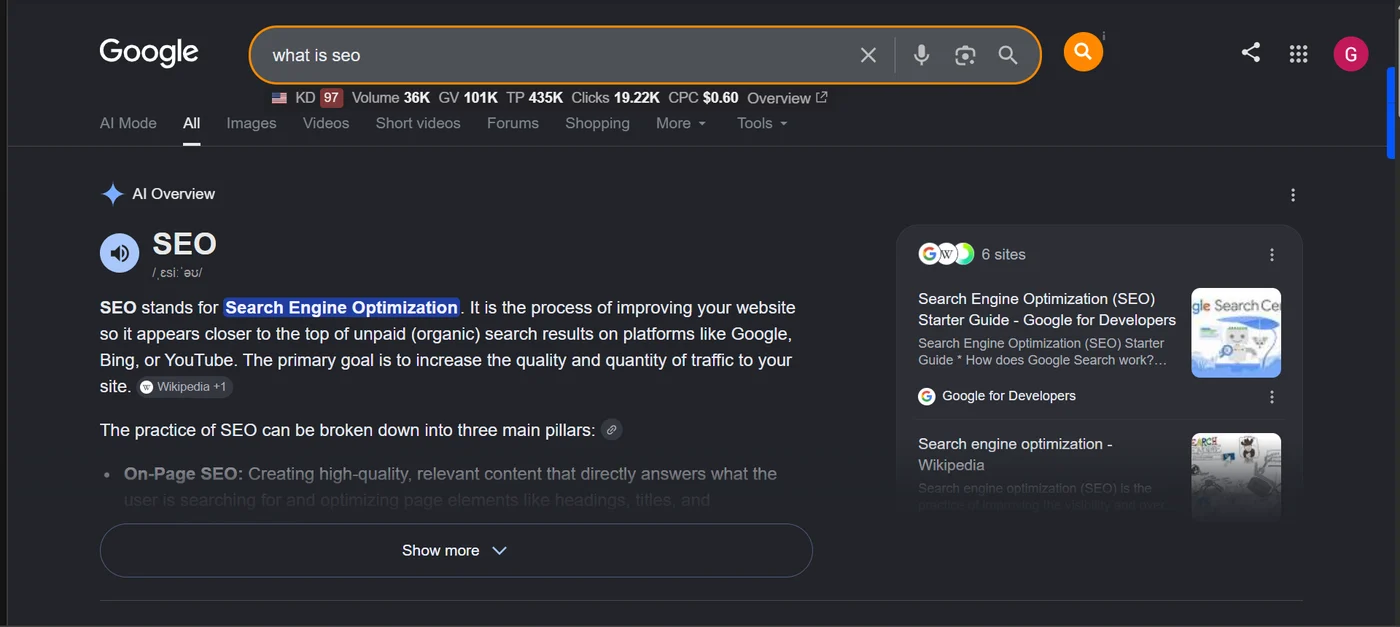
A jargon-free definition
Think of the internet as an enormous, unsorted library with no card catalogue. Search engines are the librarians. SEO is the work of making your book easy for the librarian to find, understand, and hand to the right reader - instead of leaving it buried in a pile nobody can search.
SEO isn’t a trick
SEO gets a reputation as a bag of algorithm hacks. It isn’t. It’s the ongoing discipline of being genuinely findable, genuinely useful, and genuinely credible - because that’s what both Google’s ranking systems and every AI system’s retrieval layer are built to reward. Tricks that don’t map to those three things stop working, usually fast.
Why SEO still matters in 2026
SEO matters because it remains the primary way people - and increasingly AI systems - discover businesses online, and because organic visibility compounds while paid visibility stops the moment you stop paying. But the 2026 case for SEO looks different from the 2023 one.
The traffic and cost case
Organic traffic doesn’t switch off when a budget runs out. Even as fewer searches end in a click - 68.01% of US Google searches in the first four months of 2026 ended without one, up from 60.45% two years earlier (SparkToro/Similarweb) - whoever gets found, clicked, or cited still wins the interaction. Everyone else doesn’t exist in it.
The proof is in the prompt volume
That 5,400-vs-13,983 stat at the top of this guide isn’t a curiosity - it’s the whole argument in one number. ChatGPT alone handles an estimated 2.5 billion prompts a day. Google’s AI Mode passed one billion monthly users just twelve months after launch, announced at Google I/O 2026 - a milestone that took the original Google Search itself years to reach. The audience has already moved. The only question is whether your content has moved with it.
The verdict: no, SEO isn’t dead
Both Google’s classic index and every AI system’s retrieval layer depend on the same crawled, indexed web that SEO has always targeted. Kill your SEO and you’re invisible to Google and every AI assistant at once - GEO doesn’t route around bad SEO, it depends on good SEO working first.
How search engines - and AI - actually work
Getting found by Google and getting cited by ChatGPT both start the same way: your page has to be crawled and indexed before anything else can happen. From there, the two paths diverge - one produces a ranked list, the other produces a synthesised answer.
The classic pipeline
Crawling → Rendering → Indexing → RankingCrawling: bots discover your pages by following links. Rendering: the page’s code (including JavaScript) is executed so the crawler can see what a visitor sees. Indexing: the page is stored in a vast database. Ranking: an algorithm scores indexed pages against a query for relevance, authority, and usefulness, and orders the results.
The AI pipeline
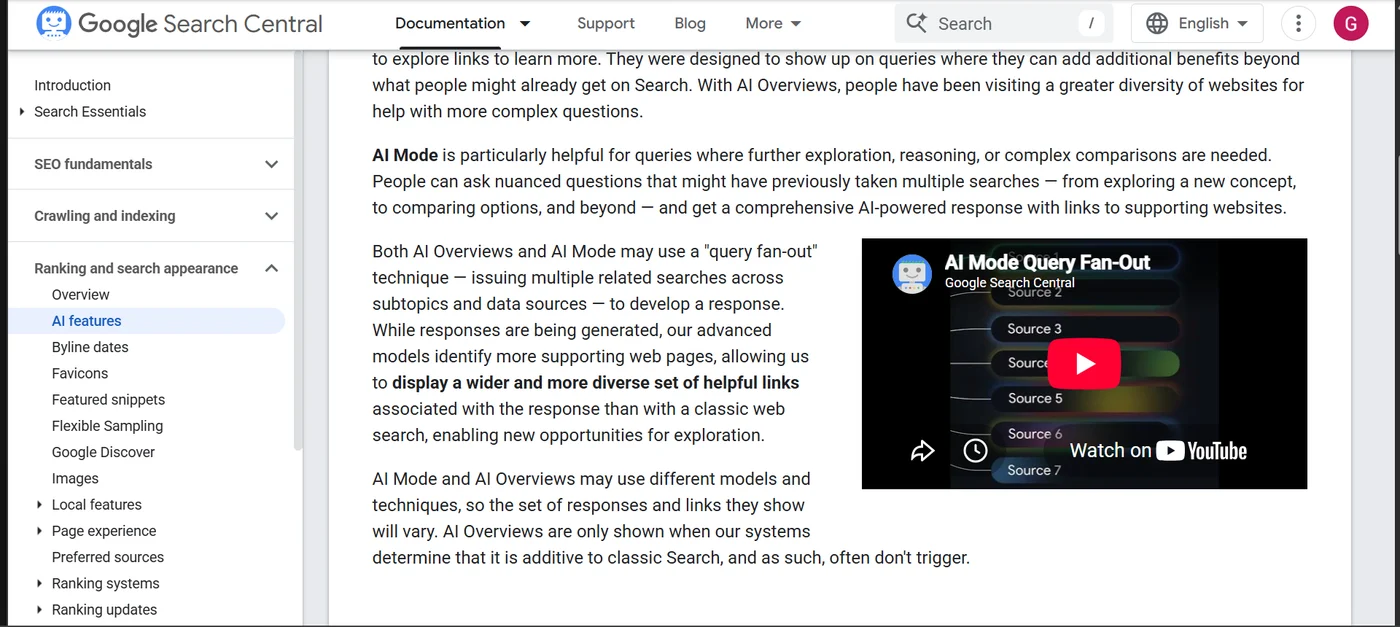
Query fan-out → Retrieval → Synthesis → CitationQuery fan-out: your question is split into several related sub-questions - Google’s own documentation gives the example of “how to fix a lawn full of weeds” fanning out into “best herbicides for lawns,” “remove weeds without chemicals,” and “how to prevent weeds in lawn.” Retrieval: indexed content is matched against each sub-question. Synthesis: an answer is written from what was retrieved - this is retrieval-augmented generation (RAG), and it’s why AI answers are grounded in live web content rather than purely what the model memorised during training. Citation: a source is credited, sometimes.
Why both depend on the same foundation
If you’re not crawled and indexed, you don’t exist to either pipeline. This is the one non-negotiable overlap between SEO and GEO, and it’s why every credible voice in this space - including Google itself - insists AI-search optimisation is still SEO at its base, not a separate discipline.
The three pillars of SEO
Every SEO task falls into one of three buckets: what’s on your own pages, the technical health of your site, and what happens beyond your site. Miss one and the other two can’t fully work.
On-page SEO
Content quality, matching what people actually search for (or ask), clear headings, internal links, and genuinely answering the question someone brought to the page.
Technical SEO
Crawlability, page speed and Core Web Vitals, mobile-first design, structured data (schema markup), HTTPS, clean URL structure, an accurate XML sitemap, and a robots.txt file that doesn’t accidentally block the crawlers you want.
Almost every item on that list is decided while a site is being built, and is expensive to change afterwards. That is the whole subject of SEO web design.
Off-page SEO
Backlinks, brand mentions (linked or not), digital PR, reviews, and social proof. One genuine 2026 shift: unlinked brand mentions now carry real weight for AI visibility - Ahrefs’ study of 75,000 brands found web mentions correlate with AI Overview visibility far more strongly (0.737 for YouTube mentions specifically) than domain rating does (0.266-0.326) - even where a mention with no link would have done almost nothing for classic PageRank.
Local SEO, briefly
A specialism, not a fourth pillar: the same three fundamentals applied to “near me” intent, built on Google Business Profile accuracy, consistent name/address/phone (NAP) details, and genuine reviews. (We break this out separately as local SEO.)
How Google actually ranks pages
Google has never published a definitive list of ranking factors, but its own guidance and independent research converge on three things that matter most: relevance to the query, authority backed by real evidence, and genuine usefulness to the person reading it.
The real signals
Relevance (does this actually answer the query), authority (is this backed by credible evidence and reputation, not just backlink volume), and usefulness (does the page genuinely help - reflected in Google’s Core Web Vitals and Helpful Content systems).
E-E-A-T, honestly
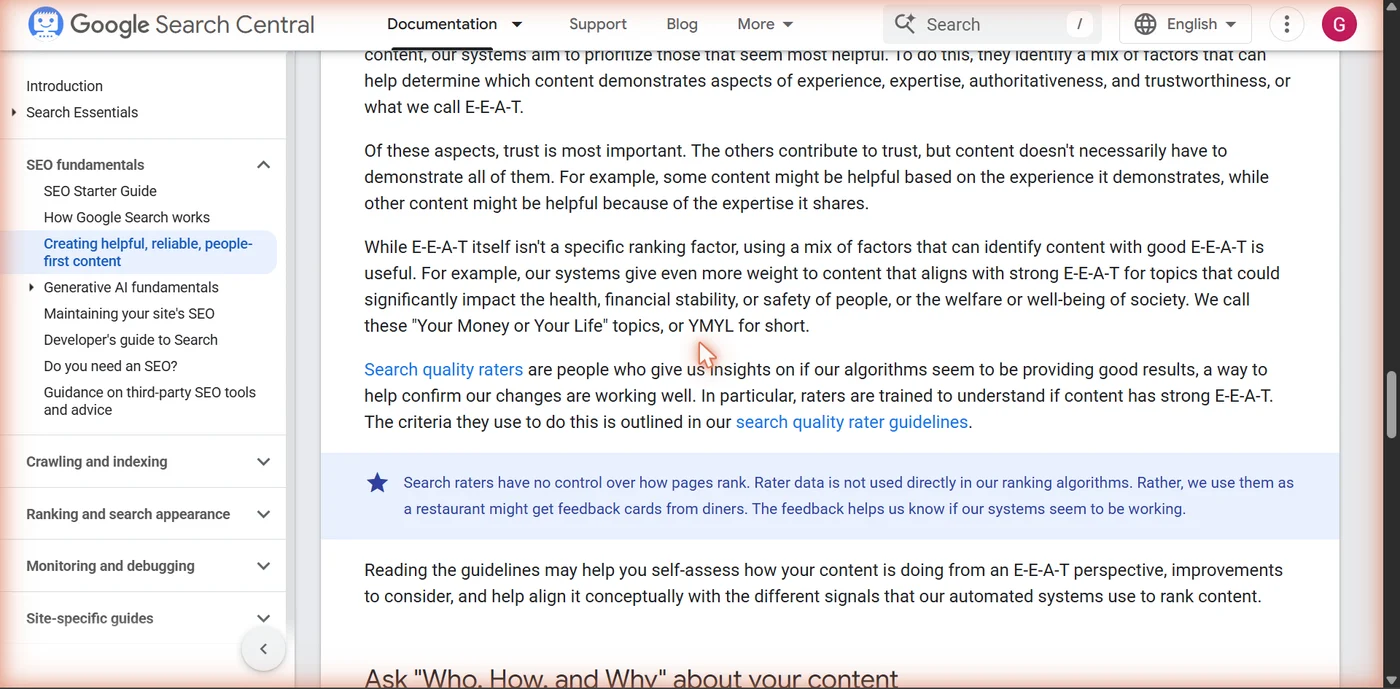
Most guides treat E-E-A-T (Experience, Expertise, Authoritativeness, Trustworthiness) as a box you tick. Google’s own documentation says otherwise: E-E-A-T is not a single scored ranking factor. It’s the framework Google’s human quality raters use to judge whether the underlying signals - real credentials, real evidence, a real reputation - add up to something trustworthy. You can’t bolt E-E-A-T onto a page the way you add a meta description. You build the signals underneath it, and E-E-A-T is the name for what they add up to.
What genuinely doesn’t matter anymore
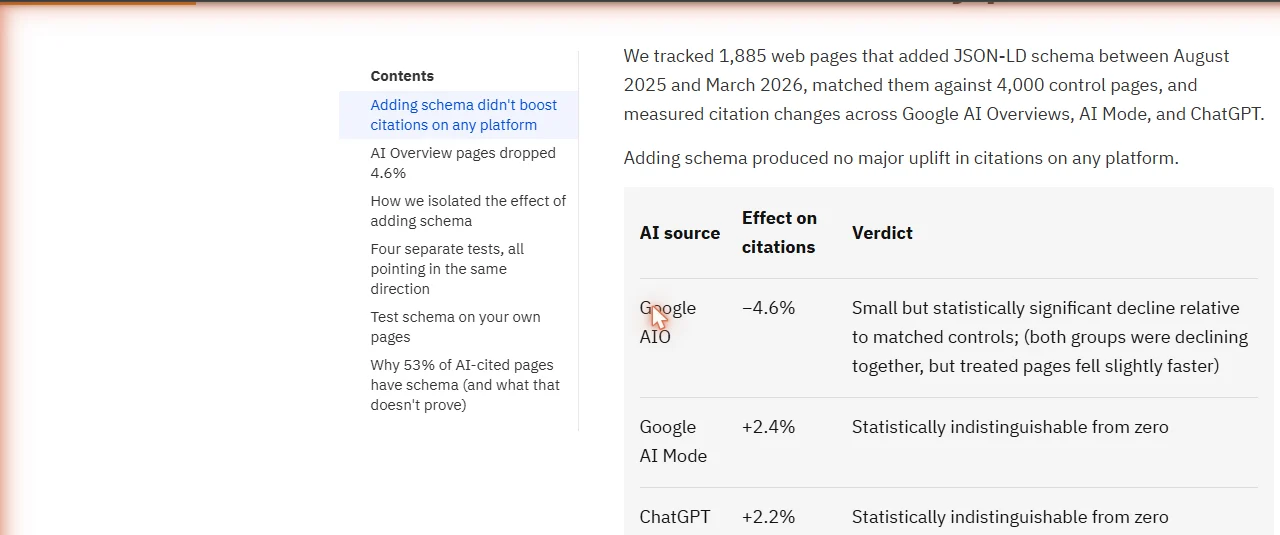
The meta keywords tag (Google has ignored it for over a decade). Keyword density formulas. Arbitrary word-count minimums - Google has repeatedly said length isn’t a ranking factor, usefulness is. And, per a controlled Ahrefs study of 1,885 pages, adding schema markup specifically to chase AI citations: Google AI Overview citations fell 4.6% on treated pages, with no meaningful effect on AI Mode or ChatGPT.
Keywords and search intent
Keyword research used to mean finding words with high volume and low competition. In 2026 it means understanding what someone actually wants when they type - or ask - something, because both Google’s algorithm and every AI system score for intent match, not word match.
The four intent types
Informational (“what is SEO”) - wants an explanation. Navigational (“Wolfstone Digital”) - wants a specific site. Commercial (“best SEO agency UK”) - comparing options before buying. Transactional (“hire SEO agency”) - ready to act.
From keywords to conversational prompts
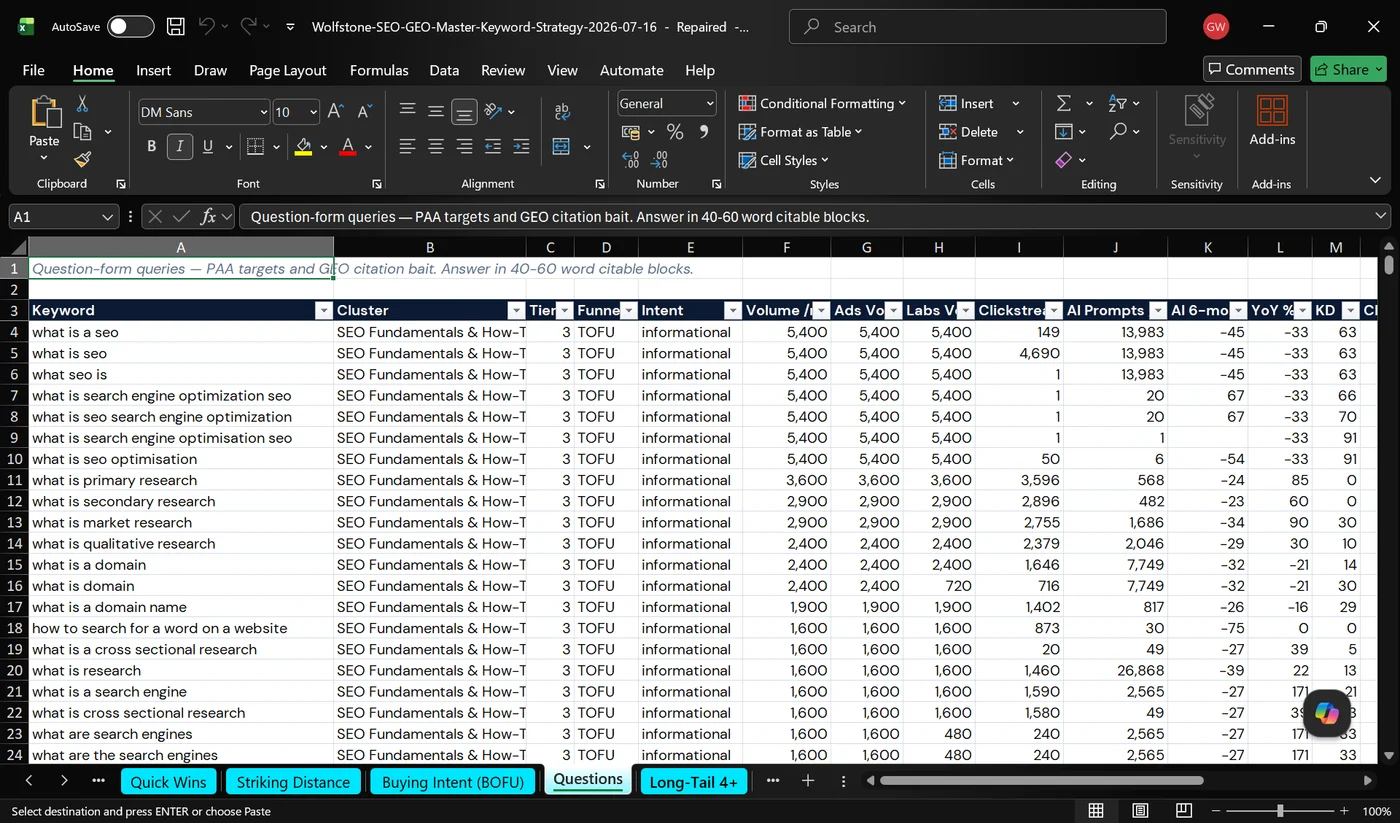
Nobody types “best crm startup” into ChatGPT - they ask a full question. Keyword research in 2026 has to account for both the terse Google query and the conversational AI prompt behind the same underlying need, which is exactly why the 5,400-vs-13,983 gap for this article’s own primary keyword matters practically, not just as a hook.
SEO vs SEM vs PPC
SEO earns visibility for free over time. SEM (search engine marketing) is the umbrella term covering both SEO and paid search. PPC (pay-per-click) is the paid half - you buy placement, and it disappears the moment you stop paying.
| SEO | PPC / Paid search | |
|---|---|---|
| Cost | Time and content investment | Ongoing budget, per click |
| Speed | Weeks to months | Immediate |
| Longevity | Compounds over time | Stops when budget stops |
| Trust | Higher - unpaid reads as credible | Lower - labelled “Ad” |
| Control | Limited - algorithm-dependent | High - bid, targeting, copy |
SEO in the age of AI: GEO, AI Overviews, and getting cited
Generative engine optimisation (GEO) is the practice of getting cited, quoted, or recommended inside AI-generated answers, rather than just ranked in a list of links. It doesn’t replace SEO - it’s what happens when SEO is done well enough that AI systems trust the result too. (For the full picture, see our dedicated guide: What Is Generative Engine Optimisation?)
SEO vs GEO vs AEO, untangled
| SEO | GEO | AEO | |
|---|---|---|---|
| Optimises for | Ranking position | AI citation or mention | Featured snippets, voice answers |
| Output | A click | A citation - often with no click | A direct spoken or snippet answer |
| Depends on | Crawlability, backlinks, content quality | All of SEO, plus entity clarity and earned mentions | Concise, structured, extractable answers |
| Measured by | Rank position, traffic | Citation frequency, share of voice | Snippet capture rate |
AEO (answer engine optimisation) is the older, narrower term - built for featured snippets and voice assistants. GEO is broader: any generative AI answer, across any platform.
What genuinely changes, what stays the same
Roughly 80% of GEO is good SEO practised properly. The genuinely new 20% is entity consistency (being described the same way everywhere), earned third-party mentions outweighing your own domain authority, and citation tracking replacing rank tracking as the metric that matters.
Common SEO myths vs facts
| Myth | Fact |
|---|---|
| ”Add meta keywords to help rankings” | Google has ignored the meta keywords tag for over a decade |
| ”Longer content always ranks better” | Google has repeatedly said length isn’t a ranking factor - usefulness is |
| ”More keywords = better rankings” | Keyword stuffing has no positive effect - the same Princeton study found it doesn’t lift AI citations either |
| ”Schema markup guarantees AI citations” | A controlled Ahrefs study found no meaningful citation lift, and a small decline for Google AI Overviews specifically |
| ”SEO is dead because of AI” | AI retrieval depends on the same crawled, indexed web SEO has always targeted |
Getting started: a beginner’s SEO roadmap
- Audit - confirm your site is indexed and crawlable in Google Search Console.
- Research - find the actual questions your audience asks, both typed and spoken or prompted.
- On-page - align content and structure to that intent.
- Technical - fix speed, mobile experience, and structured data.
- Off-page - earn genuine mentions and links; don’t buy them.
- Measure - track rankings and traffic, and increasingly, AI citation frequency.
- Repeat - SEO isn’t a one-off project. It’s ongoing maintenance, not a launch.
How to measure SEO success
Rankings alone don’t tell you whether SEO is working anymore - not when a page can sit at position one and still lose the click to an AI Overview sitting above it. Measurement in 2026 means tracking both the classic metrics and the new ones.
Google Search Console and GA4
Impressions, clicks, average position, organic traffic, and conversions - still the baseline, still essential.
Beyond rankings
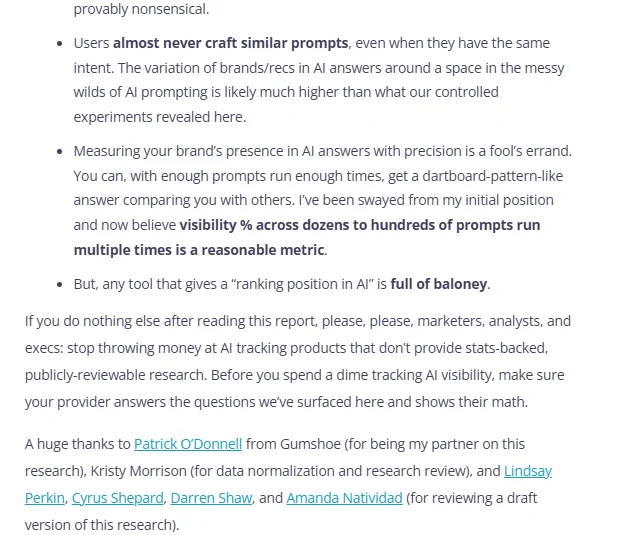
Google’s own Generative AI performance report in Search Console, launched June 2026, now shows how often your pages appear inside AI Overviews and AI Mode. Beyond that: citation frequency across AI platforms, AI-referral traffic tagged in GA4, and branded search volume as a lagging signal people are hearing your name somewhere. What’s not worth tracking closely: a single “AI ranking position.” SparkToro’s research - 2,961 prompts run across ChatGPT, Claude and Google AI - found less than a 1-in-100 chance of getting the same list of recommended brands twice. Rand Fishkin’s own verdict: “any tool that gives a ‘ranking position in AI’ is full of baloney.”
Frequently asked questions
What does SEO stand for? Search engine optimisation - improving a website so it ranks higher in organic search and gets recommended more by AI systems.
Is SEO free, or does it cost money? The clicks are free, but the work isn’t - content, technical fixes, and time (yours or an agency’s) all cost something. It’s cheaper than paid ads over time, not free.
How long does SEO take to work? Typically three to six months for meaningful movement, longer in competitive niches. Anyone promising results in days is selling something else.
Can I do SEO myself, or do I need an agency? You can do the basics yourself - this guide covers them. Technical audits and competitive strategy are where most people bring in help.
What’s the difference between SEO and SEM/PPC? SEO is unpaid and compounds over time. PPC is paid and stops the moment the budget does. SEM is the umbrella term covering both.
Is SEO dead because of AI? No. AI systems retrieve from the same crawled, indexed web SEO has always targeted - broken SEO means invisible to Google and every AI assistant.
What is GEO, and is it different from SEO? GEO (generative engine optimisation) is getting cited inside AI-generated answers rather than just ranked. It builds on SEO - roughly 80% of it is SEO done properly.
Is E-E-A-T actually a Google ranking factor? No - Google’s own documentation says E-E-A-T is a quality framework its human raters use, not a single scored ranking signal. You build the underlying trust signals; E-E-A-T describes the result.
What are backlinks, and do they still matter? Links from other sites to yours. They still matter for classic rankings, but unlinked brand mentions now correlate more strongly with AI visibility than domain authority does.
What tools do I need to get started? Google Search Console and Google Analytics (GA4), free from Google, cover the essentials for tracking indexing, traffic, and performance.
Future-proofing your search visibility
SEO isn’t dead. It’s the foundation everything else - including AI visibility - is built on top of. The businesses treating it as optional in 2026 are the ones about to discover they’re invisible to Google and every AI assistant at once, for exactly the same reason.
Free tool · AI Visibility Checker

Is your site visible - to Google and to AI?
Run your site through the free AI Visibility Checker to see whether Google and AI answer engines like ChatGPT, Gemini and Perplexity can currently find and cite you - or whether they're naming a competitor instead.
- See whether Google and AI engines can find you
- Covers ChatGPT, Gemini, Claude, Perplexity and Google AI
- Spot the queries where a competitor wins instead
- Free - no account needed
Related articles